

Noticias
Home | Noticias
Cape Verde is investing in specialized training to strengthen its response to public health emergencies
03 agosto, 2026
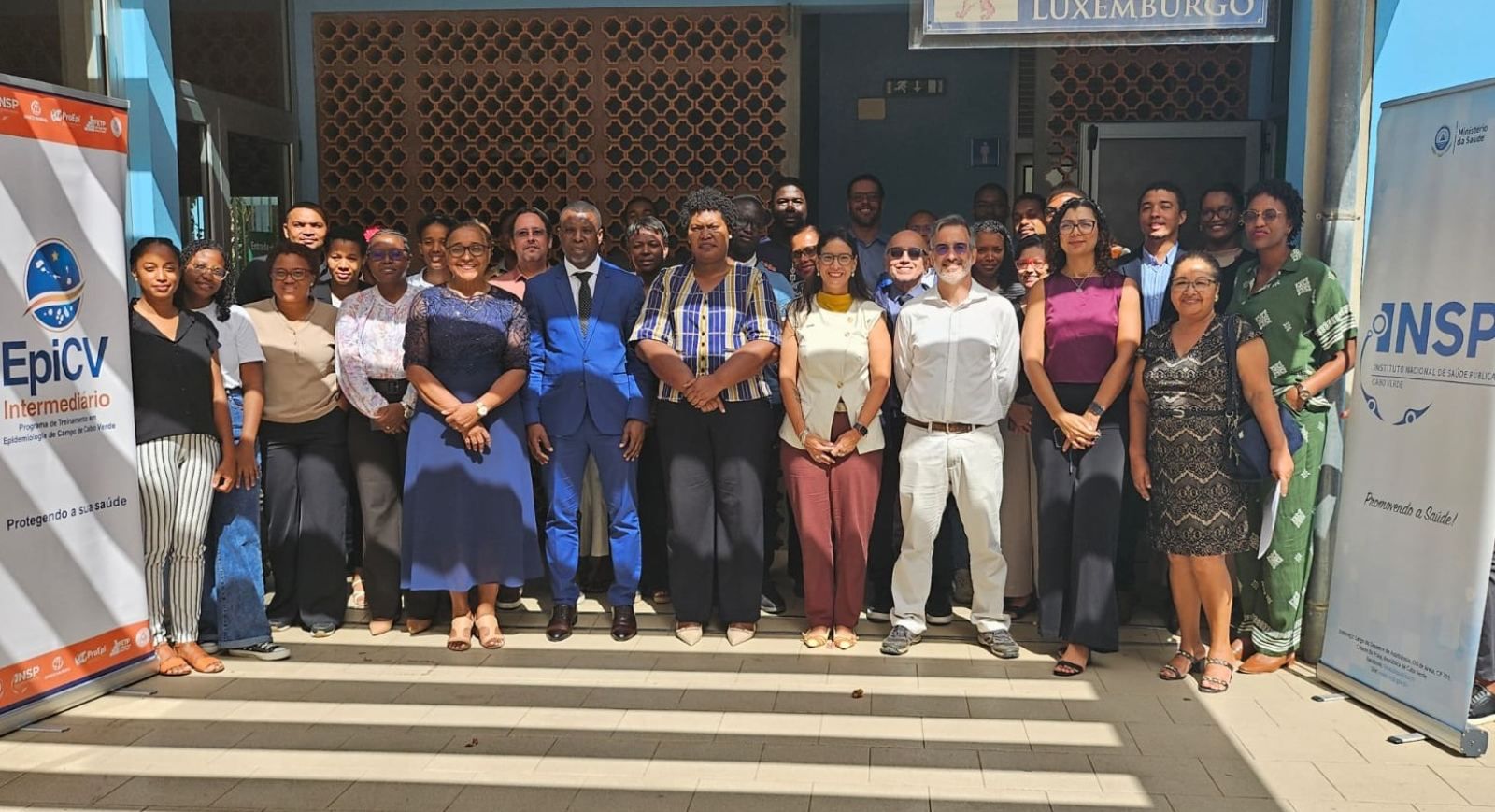
Strengthening national capacity for epidemiological surveillance and preparing professionals to respond more effectively to future health threats are the main objectives of the first cohort of the Intermediate-Level Field Epidemiology Training Program (Intermediate FETP), which began this Monday, August 3, in Praia.
Organized by the National Institute of Public Health (INSP), this new phase of the Cape Verde Field Epidemiology Program (EpiCV) will train 18 national professionals, continuing the country’s efforts to strengthen human resources in the area of public health.
EpiCV was created following the Joint External Evaluation (JEE) conducted in 2019, which identified the need to increase the availability of professionals specialized in field epidemiology. Since then, the program has made significant progress, training more than 100 technicians through eight Frontline-level cohorts, covering the three health sectors (environmental, animal, and human) across the country.
Based on these results, the INSP is now launching a more advanced phase of training through the Intermediate FETP, focused on developing technical skills in epidemiological investigation, data analysis, evaluation of surveillance systems, and response to public health events.
The training is being conducted as part of the Health Security Project in West and Central Africa and the Pandemic Fund, through the Special Projects Management Unit (UGPE), with technical support from the Brazilian Association of Field Epidemiologists (ProEpi).
Over the course of nine months, with a total of 564 hours, participants will have access to a hybrid learning model that combines in-person sessions, virtual support, and practical activities in real-world settings.
Partilhar